If you’re a secondary economics teacher, you’ve probably spent time teaching supply and demand and are looking for a fun way to bring those concepts together at the end of the unit. If so, I’ve got a project idea that my students always enjoy!
A few years ago, I had my students complete a supply and demand project where they created their own music festival lineup. Not only was it highly engaging, but it also gave students an opportunity to apply economic concepts in a real-world context.
In this post, I’ll give you an overview of how the project works and why it has become one of my favorite supply and demand activities.
Supply and Demand Project for High School Economics Students
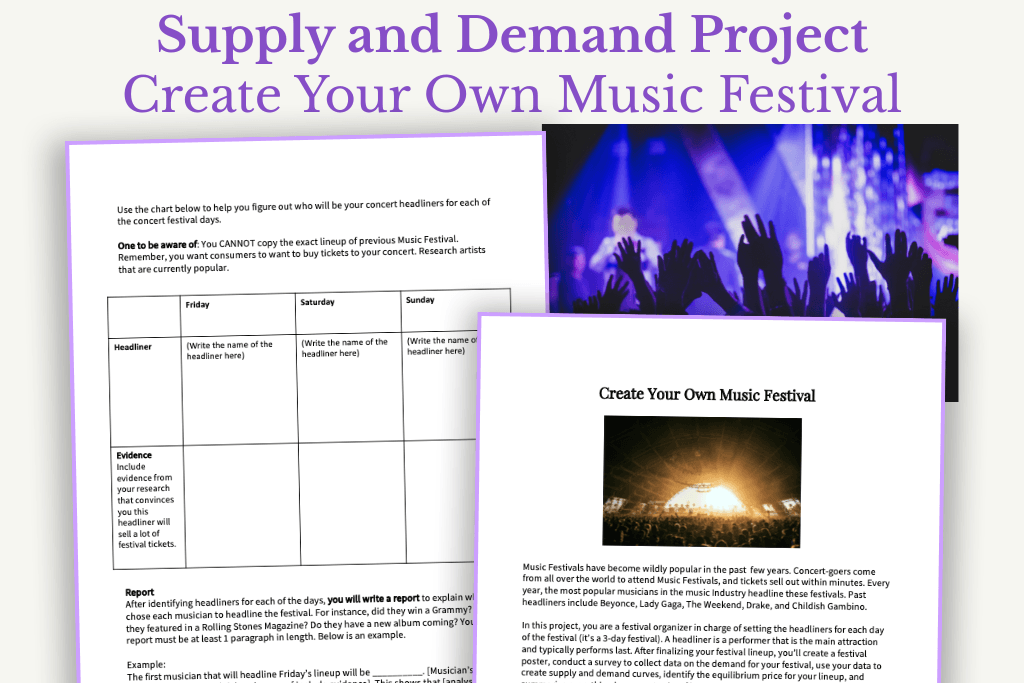
For this project, students take on the role of music festival organizers. Their goal is to create a festival lineup that will attract as many ticket buyers as possible.
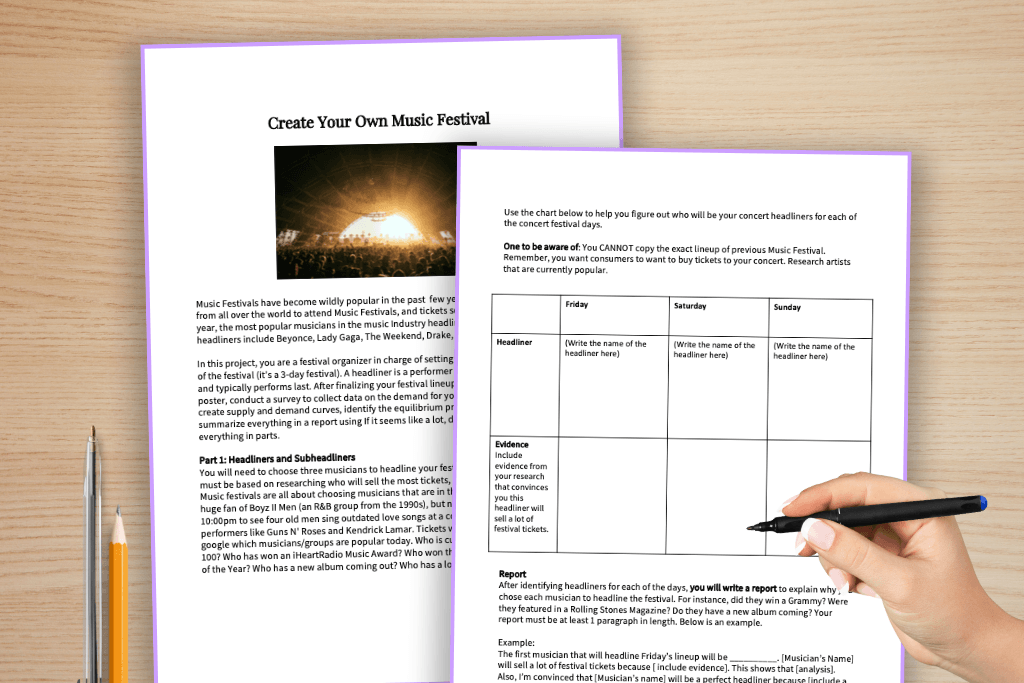
One of the first challenges students face is selecting their headliners. While many students initially want to choose their favorite artists, they quickly realize that successful festival organizers have to think about consumer demand rather than personal preferences.
To make their decisions, students research current music trends and use real-world data to determine which artists are most likely to attract a large audience. This often leads to some great classroom discussions as students debate which artists would generate the highest demand and why.
As students research, they gather evidence to support their choices and explain why their selected artists would be successful headliners.
Music Festival Activity That Makes Supply and Demand Relevant
Once students have selected their headliners, they create a music festival poster.
This is usually the point in the project when excitement starts to build. Students enjoy seeing their ideas come together and often become surprisingly invested in making their festival look professional.
I have students use Canva to design their posters, although you could use any design platform your students are familiar with. The finished posters become an important part of the next phase of the project.
Hands-On Economics Activity Using Student Survey Data
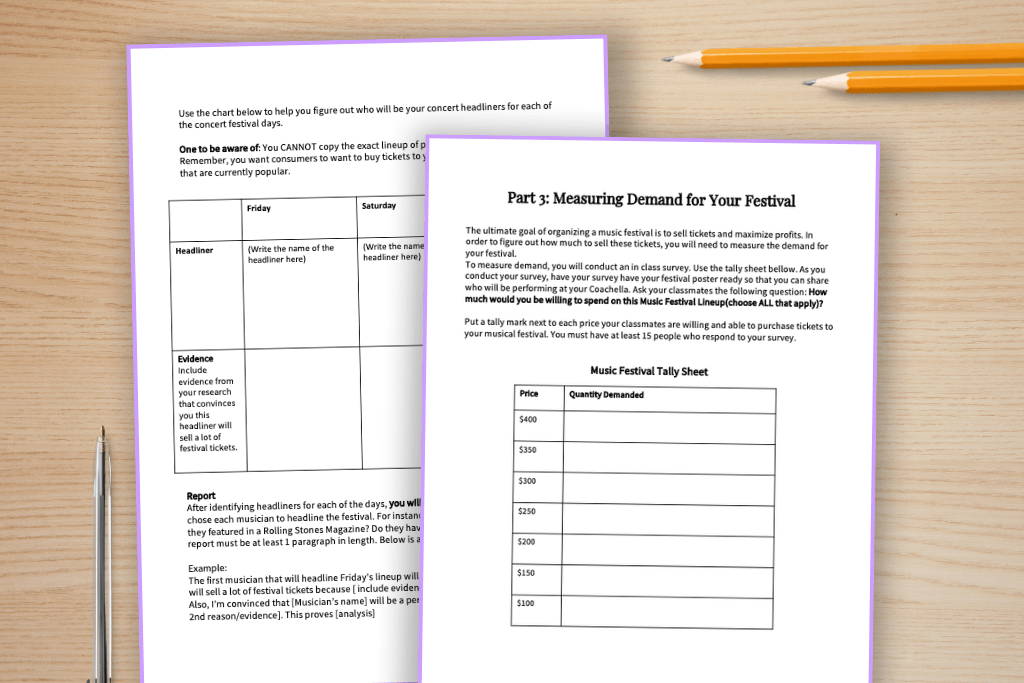
After completing their posters, students conduct an in-class market survey to measure demand for their festival lineup.
This is one of my favorite parts of the project because students get out of their seats, interact with their classmates, and begin collecting real data. Students share their festival lineup with their peers and gather information that will later help them analyze the market for their event.
Rather than simply looking at examples in a textbook, students are working with data that they collected themselves, which makes the concepts feel much more authentic.
Teaching Equilibrium, Shortages, and Surpluses Through a Real-World Simulation
Once students have collected their survey data, they use that information to analyze market outcomes and apply the concepts we’ve studied throughout the unit.
Students examine how demand affects pricing decisions and explore what happens when prices are set too high or too low. They also consider how changes in consumer interest could affect the success of their festival.
This portion of the project helps students move beyond memorizing vocabulary and instead apply economic reasoning to a realistic scenario.
Why This Supply and Demand Activity Engages High School Students
One of the reasons I continue to use this project is that it combines several things students enjoy:
- Music and popular culture
- Student choice
- Creativity
- Collaboration
- Real-world decision making
At the same time, students are practicing important economics skills and applying concepts such as demand, equilibrium, shortages, surpluses, and changes in demand.
Many students don’t even realize how much economics they’re doing because they’re so focused on creating the best festival possible.
Ready-to-Use Supply and Demand Project for Economics Classes
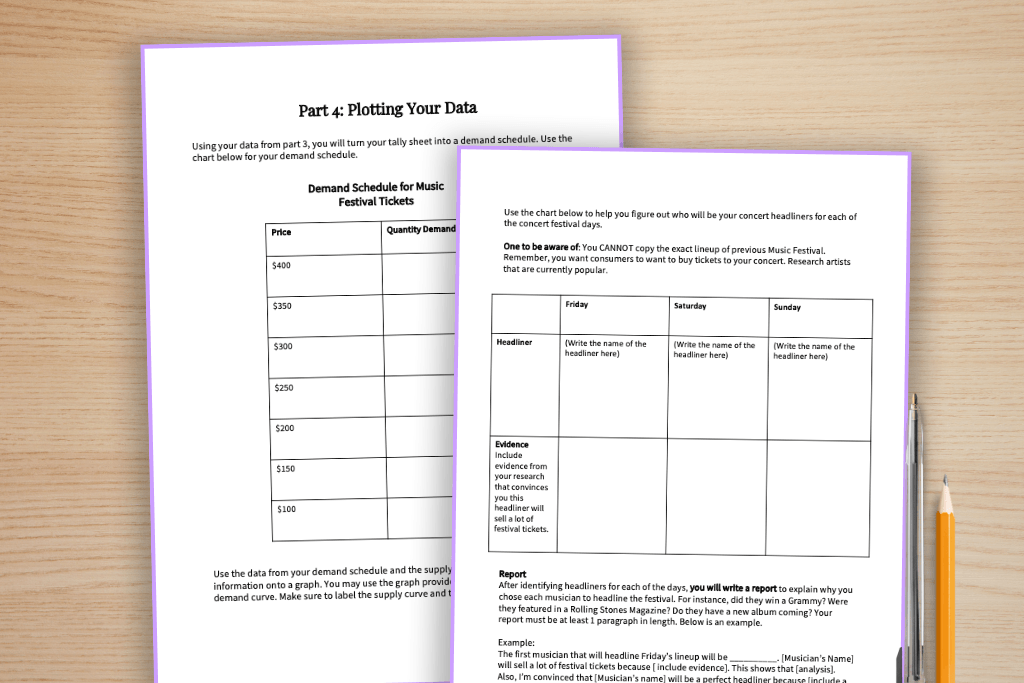
While you can certainly adapt this idea for your own classroom, I created a complete resource that includes everything needed to implement the project with minimal prep.
The resource includes student handouts, graphic organizers, survey materials, graphing activities, rubrics, and a teacher guide to help make implementation easy.
If you’re looking for an engaging way to wrap up your supply and demand unit, you can check out the complete project here.
Happy teaching!


One Response