Why Teaching Identity Matters in High School Ethnic Studies
More and more schools in the United States, especially in California, are offering ethnic studies courses in high school. And as these courses expand, teachers are often being asked to cover topics like identity, culture, and lived experience in meaningful ways—sometimes without a lot of ready-to-use resources to support them.
I think this shift is a good thing. It wasn’t until college that I was introduced to ethnic studies, but I wish I had these types of lessons when I was in high school.
When I took ethnic studies in college, I learned a lot about myself. It gave me space to think more deeply about my own experiences and identity in a way I hadn’t before. I think a lot of high school students benefit from having those same opportunities earlier. Many students don’t often get the chance in school to slow down and reflect on who they are, how their experiences shape them, and how different parts of their identity connect together.
Since ethnic studies is still a relatively new course of study for many high school students, there is a lack of quality resources available for teachers. I know this from my own experience. I’ve created a few ethnic studies lessons and plan on creating more.
What Students Learn in This Identity and Intersectionality Lesson
One of the ethnic studies lessons I’ve created is on Identity and Intersectionality. The purpose of this lesson is for students to learn and define the terms identity and intersectionality, and then explain how overlapping identities can shape a person’s lived experience.
This lesson also helps students move beyond surface-level ideas of identity and start thinking about how different parts of who they are connect and show up in real-life situations. It gives students the opportunity to reflect on themselves while also thinking more deeply about the experiences of others.
Inside the Identity and Intersectionality Activity
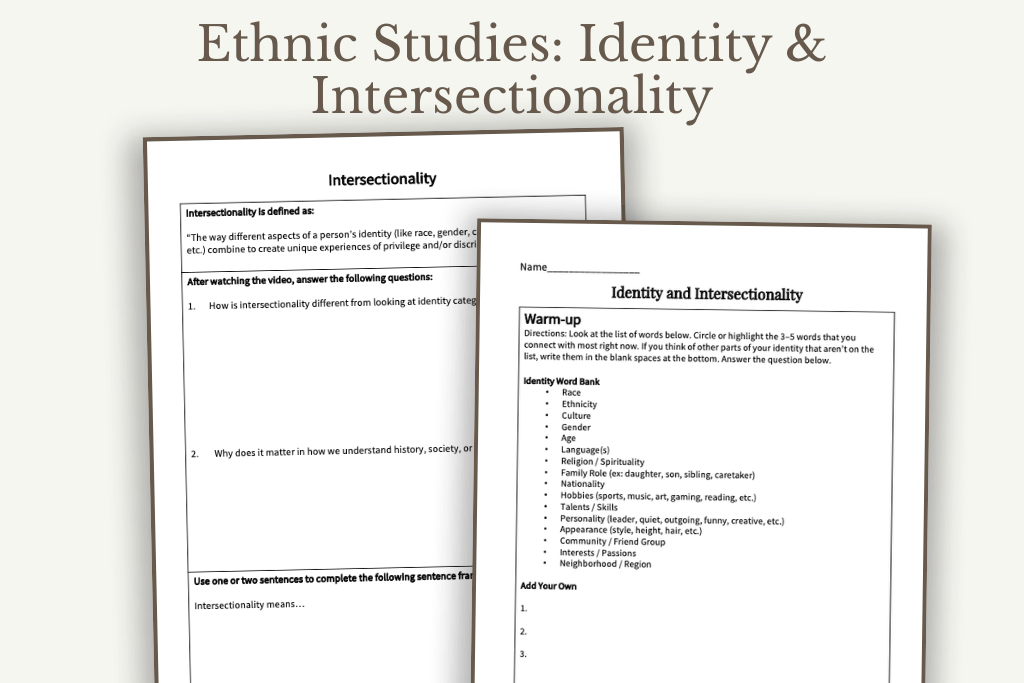
The lesson begins with a warm-up where students choose 3–5 words related to identity that they connect with the most. Then, students explain why they chose these words. This simple entry point helps students start thinking about identity in a personal way before any formal instruction. It also helps create space for reflection in a topic that can feel very personal for students.
Next, students are introduced to the definition of intersectionality. I give them the following definition:
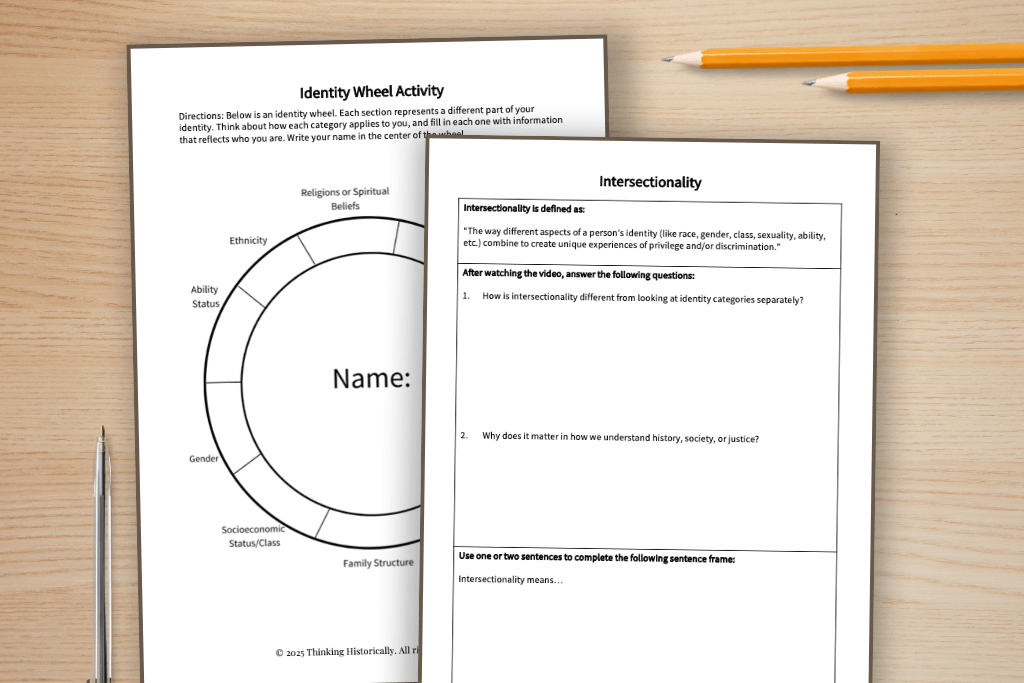
“Intersectionality is the way different aspects of a person’s identity (such as race, gender, class, sexuality, ability, etc.) combine to create unique experiences of privilege and/or discrimination.”
From there, students complete an Identity Wheel activity where they explore different parts of who they are. Students are given categories such as neighborhood, languages, family structure, and more, and they fill them in based on their own experiences. As students work through the wheel, they often begin to realize that identity is more layered than they initially thought, and that a single label doesn’t fully capture who someone is. Many students also begin noticing parts of their identity they may not normally think about in school settings.
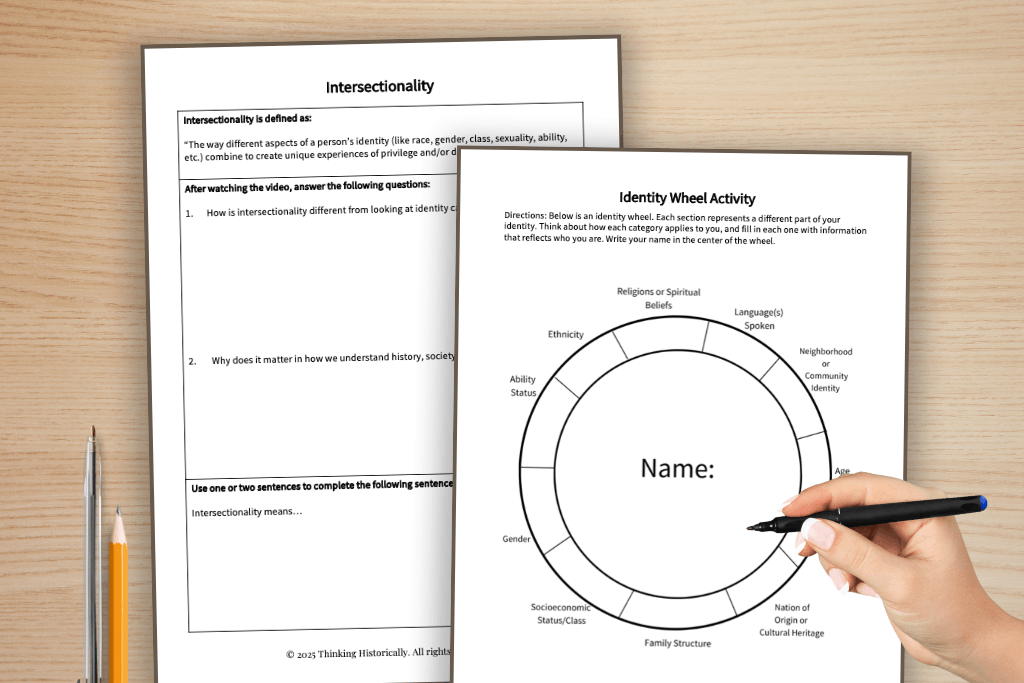
After completing the identity wheel, students respond to guided reflection questions based on what they wrote. This is where they start connecting different aspects of their identity to their lived experiences and thinking more deeply about how those parts show up in real life. These reflections often lead students to make connections about themselves that they may not have considered before.
Next, students work through a set of hypothetical scenarios. In each one, they consider how different identities overlap and shape a person’s experience. Students think about how those identities might create different challenges or opportunities, and how the situation might change if only one aspect of identity was considered. This is where students really begin applying the concept of intersectionality beyond themselves and into real-world situations. It also helps students understand why two people can experience the same situation very differently based on the identities they hold.
Finally, students complete an exit slip where they explain how overlapping identities shape a person’s experience. This helps them pull together everything from the lesson in their own words and reflect on what they’ve learned.
Why Teachers Love This Identity and Intersectionality Lesson
This lesson is easy to implement and gives students the opportunity to engage in meaningful conversations with their peers while also learning more about themselves. It encourages students to reflect, listen to different perspectives, and think more critically about how identity shapes people’s experiences.
Get the Full Identity and Intersectionality Activity (TPT Resource)
If you’d like a ready-to-use lesson that helps students engage in meaningful discussions about identity and intersectionality, you can check out the full resource here.